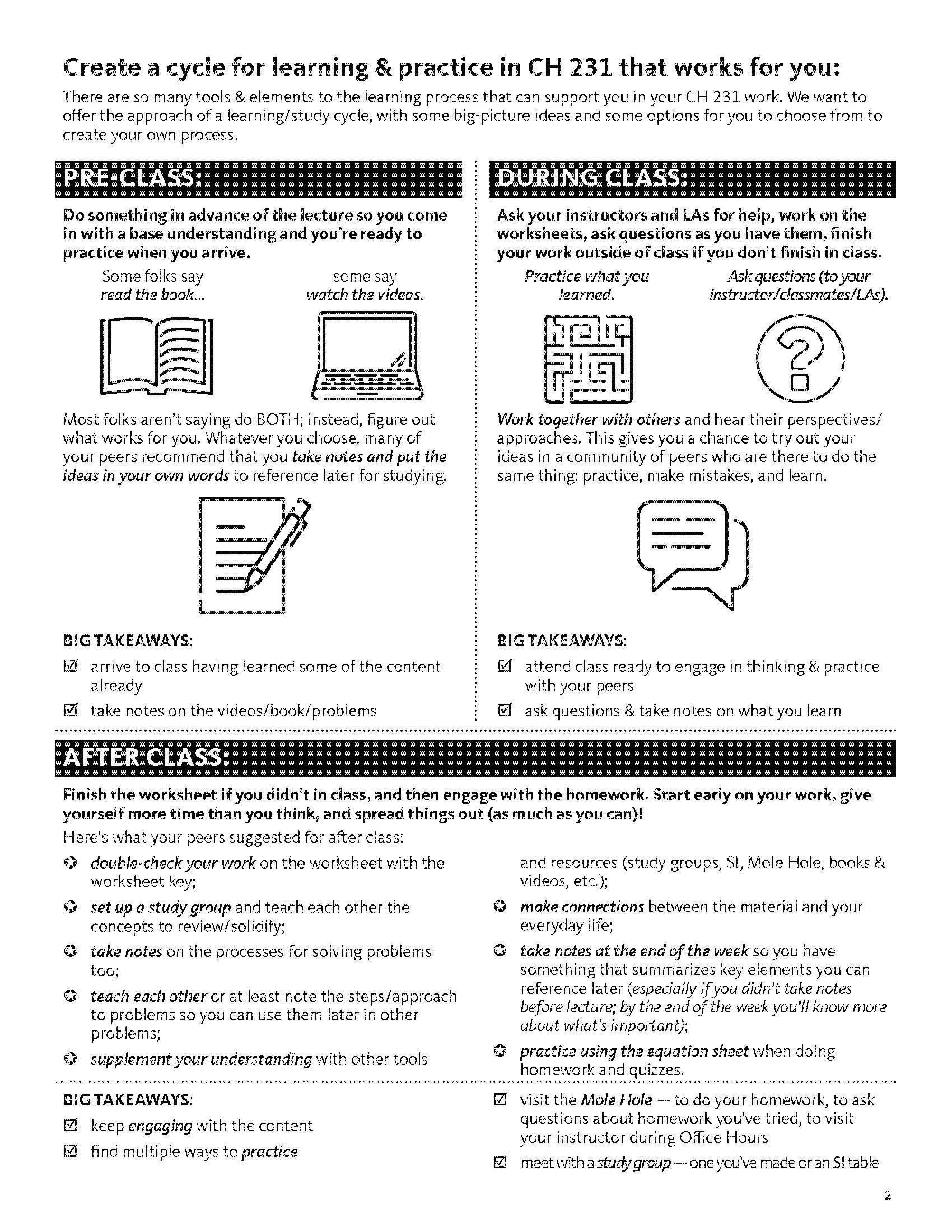
Develop a Course Guide
Support student learning in the classroom
"What does it take to be successful in this course?"
It isn't uncommon to assume students will know to ask this question, or will know who to ask this question, or how. It's assumed they'll find the answer early in the term and proceed from there.
However, many students aren't asking this question (and learning its answers) until partway through the term, or the end of the term. Some aren't asking or finding the answer at all.
Together, we can change that and support improved student experience and success in the classroom.
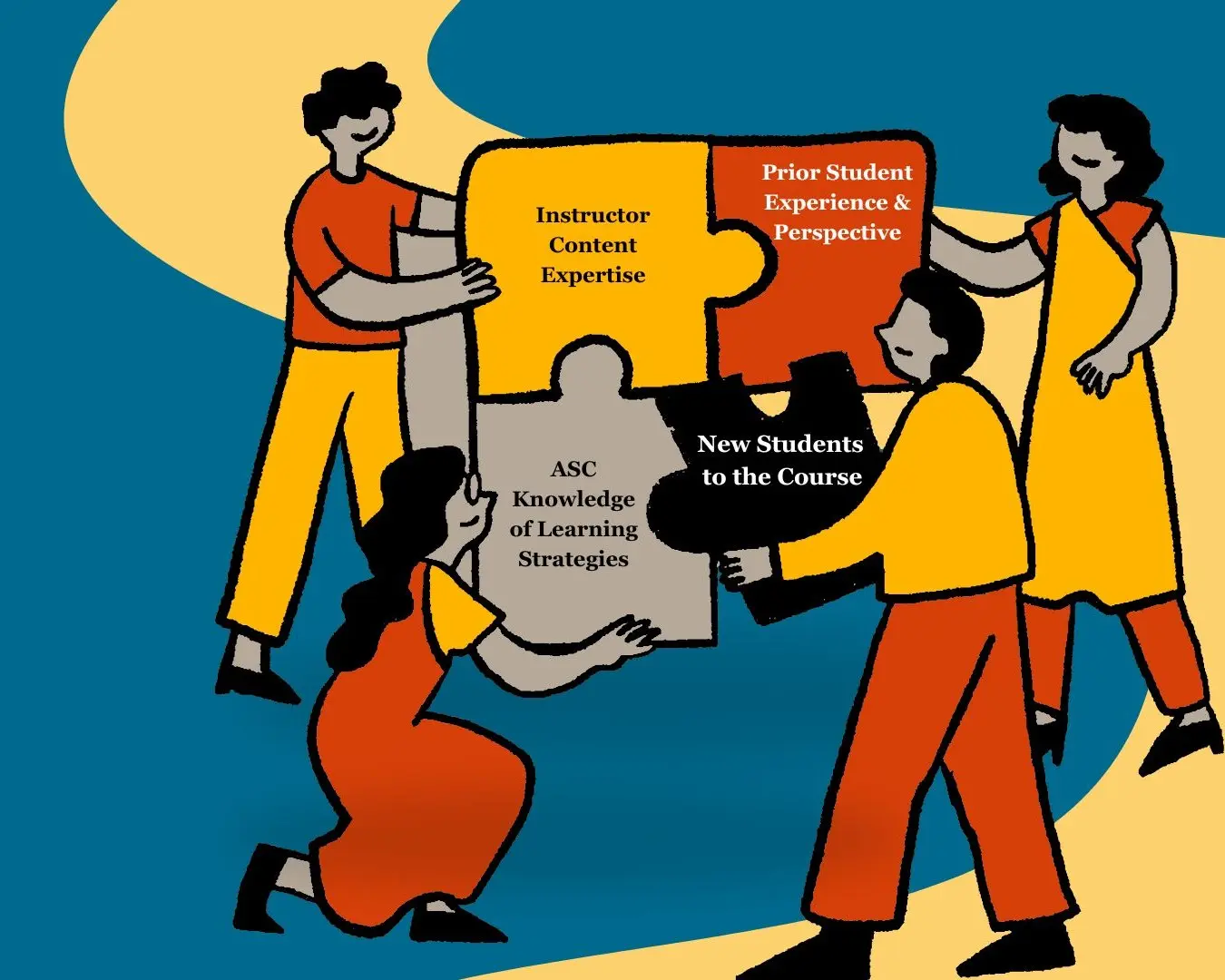
We're excited to engage in this work with you.
By collaborating on content, learning strategy and structure, we can close gaps for students and better support their academic success.
Our framework is simple and effective:
- we learn from students who've already taken the course about what resources and strategies they recommend, what they wish they'd known when they started, and advice they have for their peers;
- we learn from experts in the content (faculty, instructors, TAs and GTAs) about how to structure learning in the course and what activities they recommend students engage with;
- we offer proven learning strategies and techniques from the science of learning and identify how to apply these in the course.
Making a Course Guide with the ASC: Process & Notes
The ASC looks forward to collaborating with you to create course guides to support students. Below, you’ll find our standard approach, but every project is different and we’re keen to adapt these steps as needed.
Steps along the way & notes:
- Develop survey questions: We have a base set of questions and collaborate with you to tailor them to the course and what we want to learn about the student experience.
- Distribute survey to students: We build the survey and provide you with a link. We’ve found it’s effective to offer this in the last 1-2 weeks of the term, and to offer it as extra credit (survey includes language that the instructor won’t see the results until after the term).
- Collect data, analyze results: Once the survey closes, we code for trends and pull student quotes/strategies to support and amplify guide content.
- Identify instructor contributions: Your observations, your syllabus, and any materials/guidance you already provide students are integral to this process! Students want to hear your voice and strategies, too.
- ASC triangulates details & sketches guide: We take what you’ve provided, what the students share, and what we offer for proven techniques and support information, and braid the ideas and information into usable content.
- Clarifying questions: We’ll confirm the strategies we offer from our own work and research are a good fit for the course and its content; we’ll gather our questions and send them to you in a batch for response.
- Round one of feedback
- Edits
- Round two of feedback
- Final edits: Steps 7 thru 9 tend to happen over one to two weeks. You know your course and content best! You’ll fill in any knowledge gaps and/or calibrate language. We can meet in person, remotely, or asynchronously. We’ll adjust the content as needed and request a final review before print.
- Print: We’ll submit the print order, receive the job, and deliver it to your office. We’ll reach out to get a final head-count from you.
- Distribute: We’ve found that it’s most effective for instructors to distribute guides at the start of the term, introducing it and its content/value at the beginning of class. Students trust their instructors’ referrals to resources. It’s also effective to share an electronic version on Canvas, and to refer students back to the guide throughout the term.
- Assess: We’re eager to learn more about how guides support students. We’d like the opportunity to ask questions during your scheduled assessments, to continue to improve this resource.
If at any time you have any questions/concerns, please don’t hesitate to contact Sarah Norek: [email protected], or 541-737-6587.
CH 221Z Course Guide, Pages 1 & 2